Travel operations technology automates supplier management, payments, commissions, invoicing, and reporting. It reduces manual work, improves efficiency, and helps prevent revenue loss.

A freelance marketplace like Upwork or Fiverr is a two-sided platform that connects clients who need work done with freelancers who provide services. It works by letting clients post jobs or browse gigs, matching them with freelancers, holding payment in escrow against milestones, and releasing funds when work is approved, taking a commission on each transaction.
Auto insurance platform development is the building of software that prices and manages car insurance based on how a vehicle is actually driven, not just demographics. It captures driving data through a smartphone app, an OBD-II device, or a connected car, scores behaviour, and turns that score into a usage-based premium. The usage-based insurance market is projected to grow from roughly $77 billion in 2026 at a 24 per cent CAGR, with safe drivers saving 30 to 40 per cent on premiums.
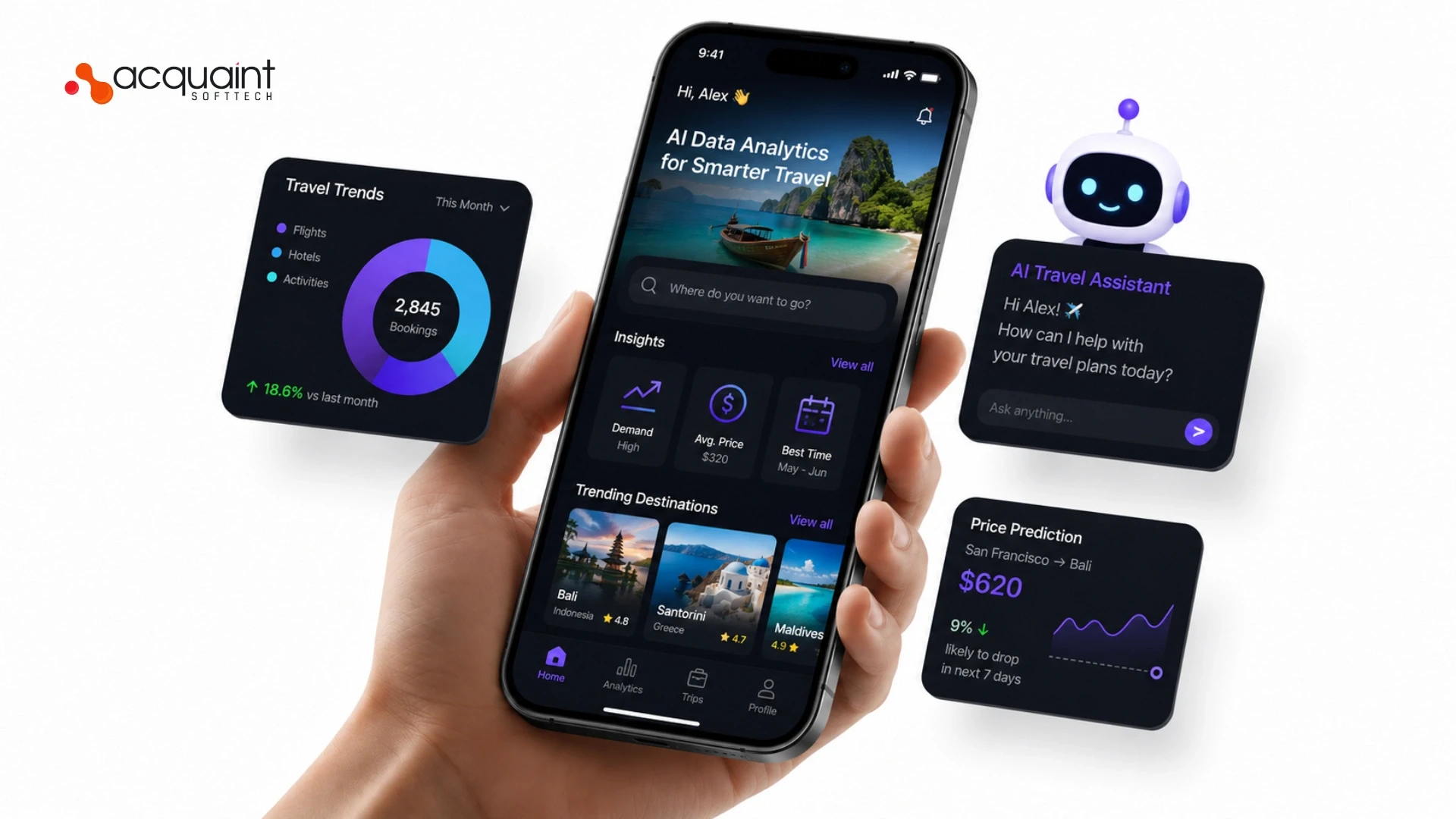
AI and data analytics in travel use machine learning to turn booking, search, and customer data into revenue. The three core engines are demand forecasting, which predicts future occupancy and bookings; price optimization, which sets the best price in real time based on demand; and customer intelligence, which identifies high-value travellers and predicts who will book or cancel. Hotels using AI-driven pricing report revenue gains of 5 to 14%.
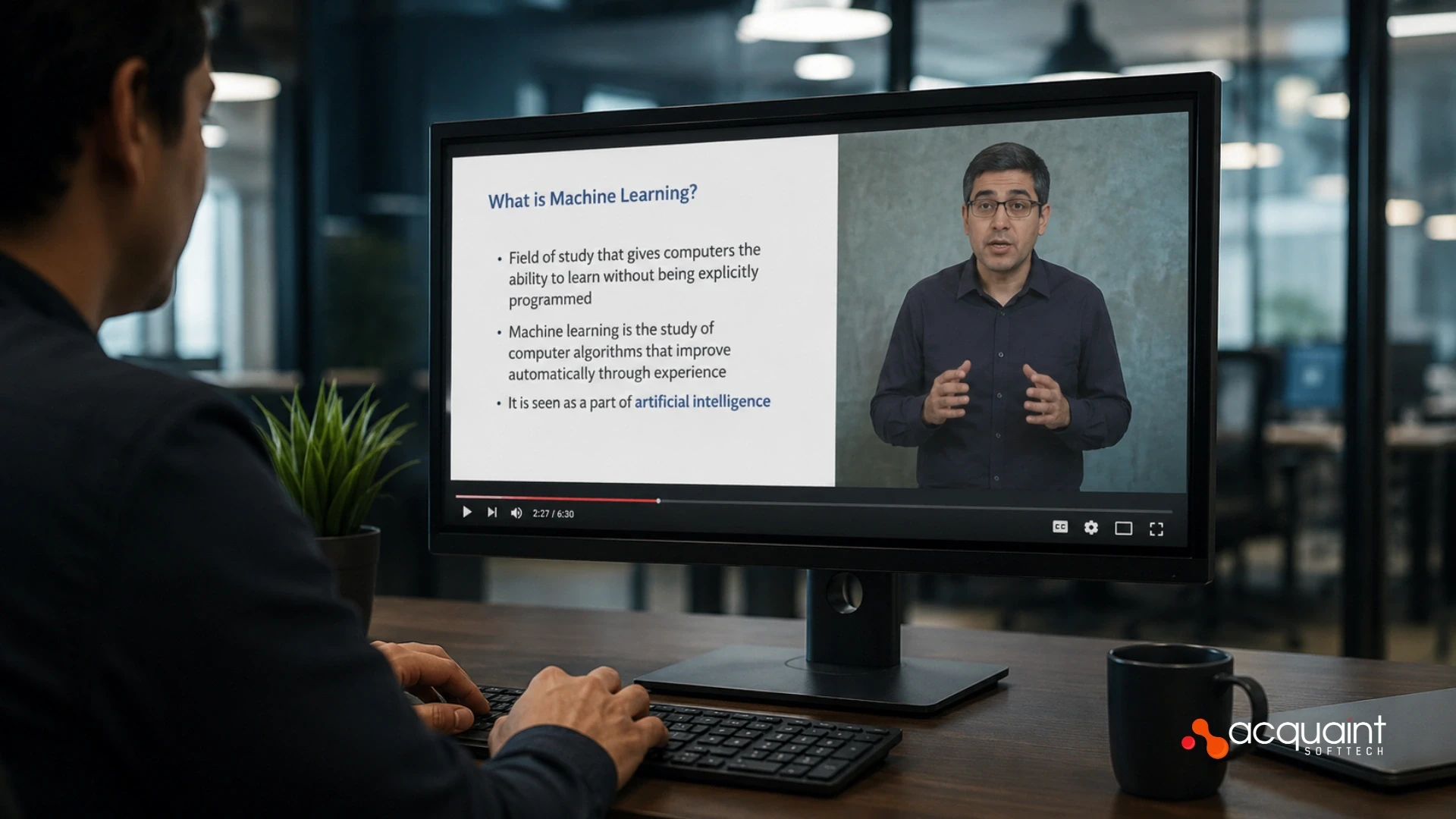
A corporate learning platform is software that manages how a company trains its workforce, covering onboarding, compliance, upskilling, and performance tracking in one system. It goes beyond a traditional LMS by tying every course to a business outcome: faster ramp-up, audit-ready compliance, closed skill gaps, and measurable performance, all connected to the HR systems a company already runs.
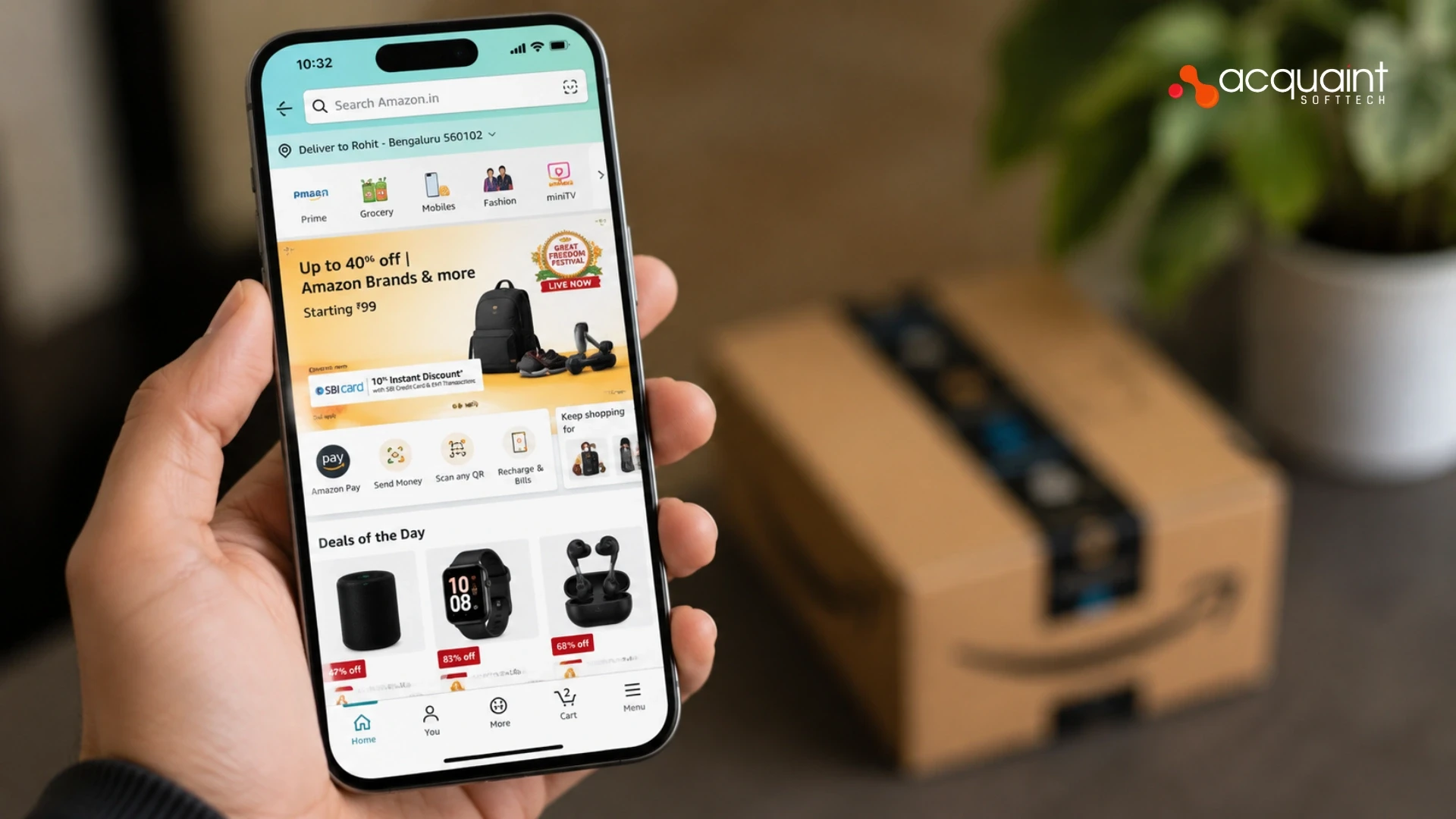
Mobile commerce development is the practice of building shopping experiences for mobile devices through native apps, cross-platform React Native apps, or Progressive Web Apps. Native apps offer the highest performance and retention, React Native delivers both platforms from one codebase at 40 to 60 percent lower cost, and PWAs give app-like speed in the browser with zero install friction.
An order management system (OMS) works by managing the full life of an order, from the moment a customer buys to the moment the parcel arrives, across every sales channel. It captures and validates each order, reserves inventory, decides which location should fulfill it through routing rules, releases it to the warehouse, and tracks it to delivery and returns. The OMS is the control layer that keeps online, marketplace, and in-store orders synchronized against one real-time view of stock.
A hospital management system (HMS) is integrated software that connects every operational and clinical function in a hospital: patient registration, appointment scheduling, EHR and EMR, pharmacy, laboratory, radiology, billing, and inventory, in a single platform with role-based access. Modern HMS builds in 2026 use microservices architecture, HL7 FHIR for integration, HIPAA-compliant cloud infrastructure, and role-based access control as the baseline.
Health insurance platform development is the building of the technology a health payer needs to enrol members, adjudicate claims, manage benefits, and connect care. It spans three pillars: a payer core system for eligibility, claims, and benefits; a member portal and app for self-service; and FHIR-based integration with telehealth, EHRs, and pharmacy systems. A custom payer platform typically costs $300,000 to $1.5M and must be HIPAA-compliant and CMS interoperability-ready from day one.
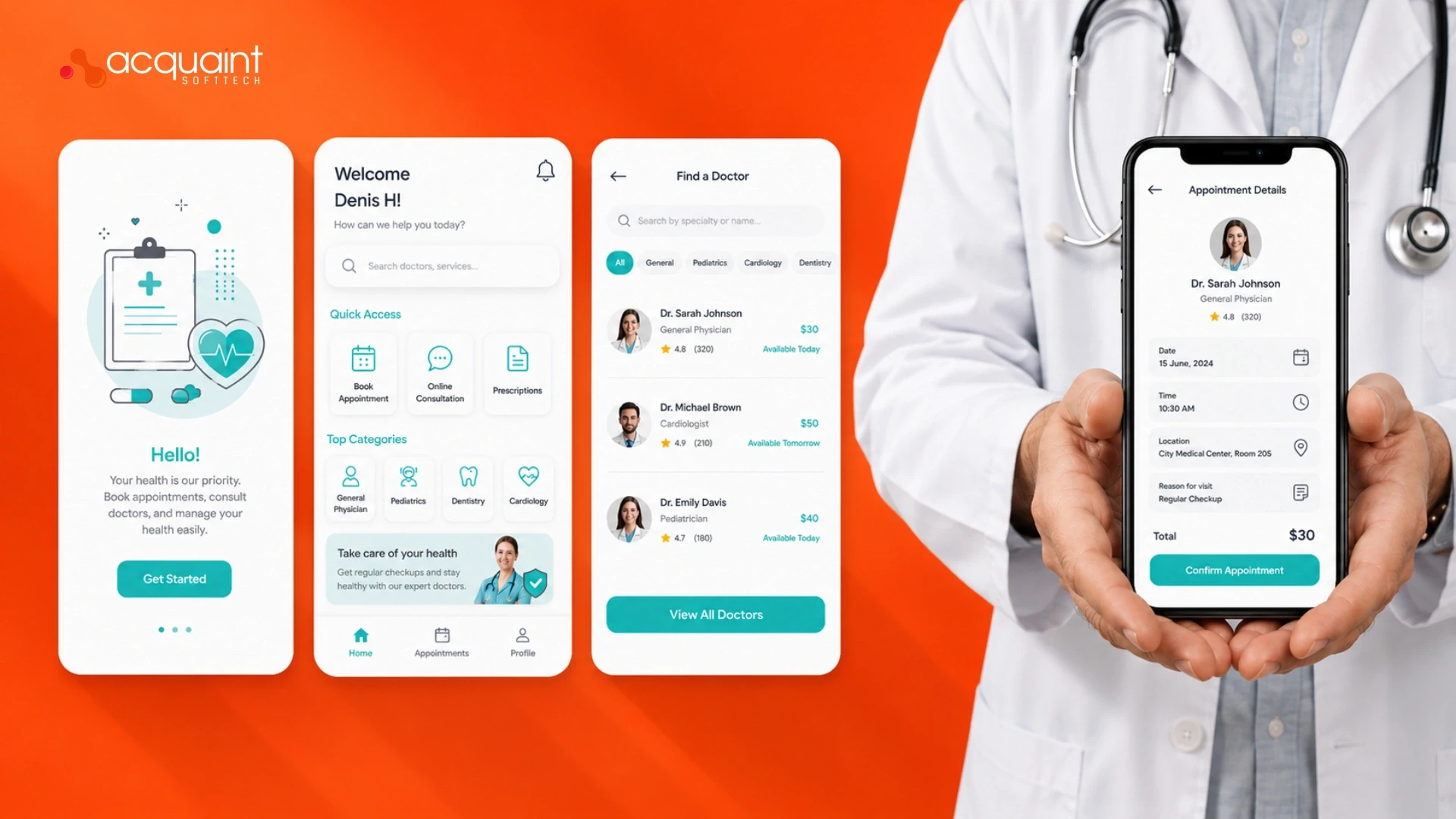
An on-demand healthcare app lets patients consult doctors, order medicines, and book home sample collection from a phone. It works by connecting patients, doctors, pharmacies, and labs through secure video consultation, e-prescriptions, prescription-validated medicine delivery, and phlebotomist dispatch, all built on a compliant, encrypted health-records backbone.
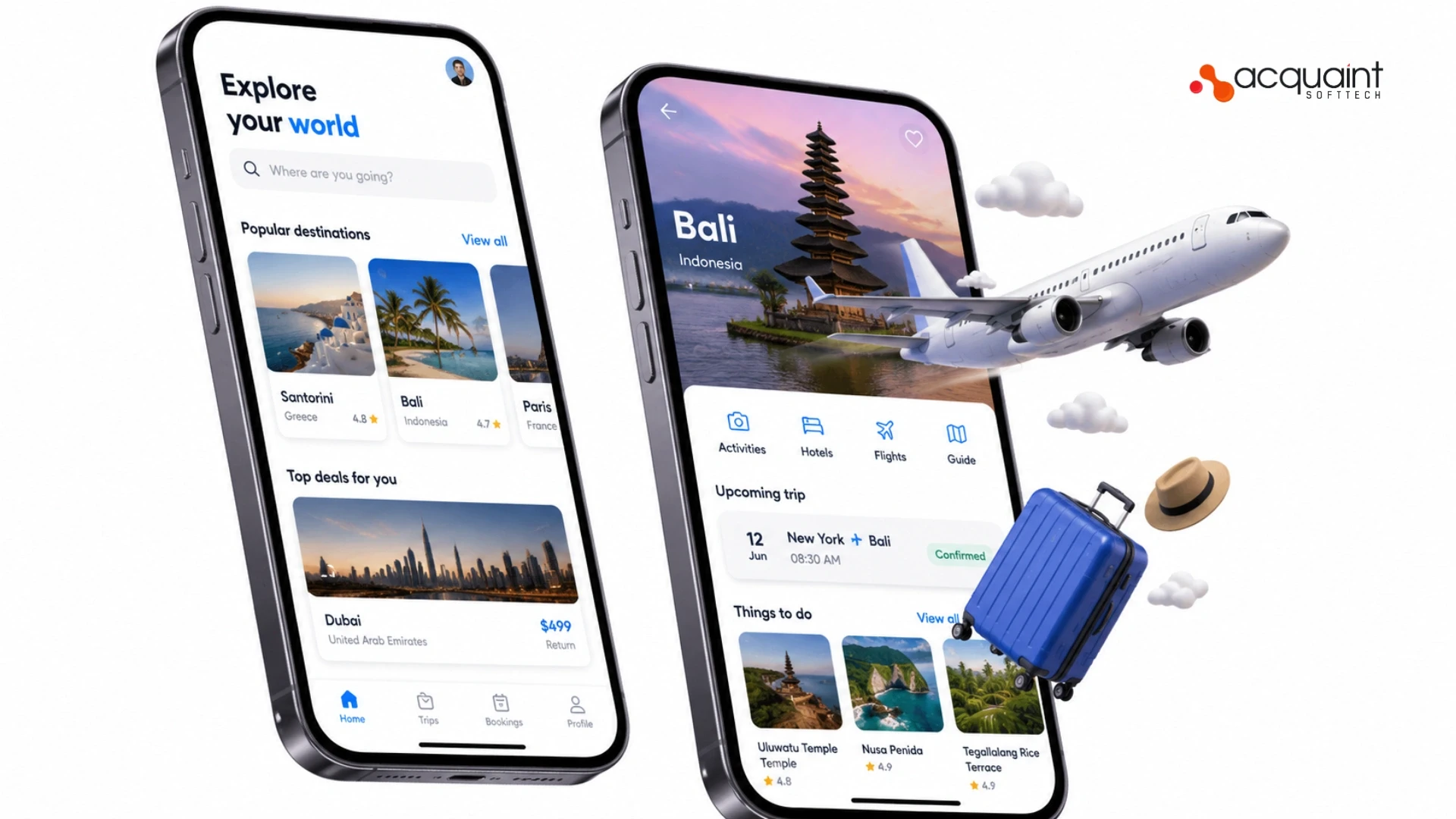
Travel app development is the process of building a mobile-first application that lets travellers search, book, plan, and navigate trips from their phone. A strong travel app rests on four pillars: a frictionless booking flow, a live itinerary that organises the trip, offline-first navigation that works without signal, and smart notifications. Cross-platform frameworks like React Native cut build cost by 30 to 40% versus separate native apps.
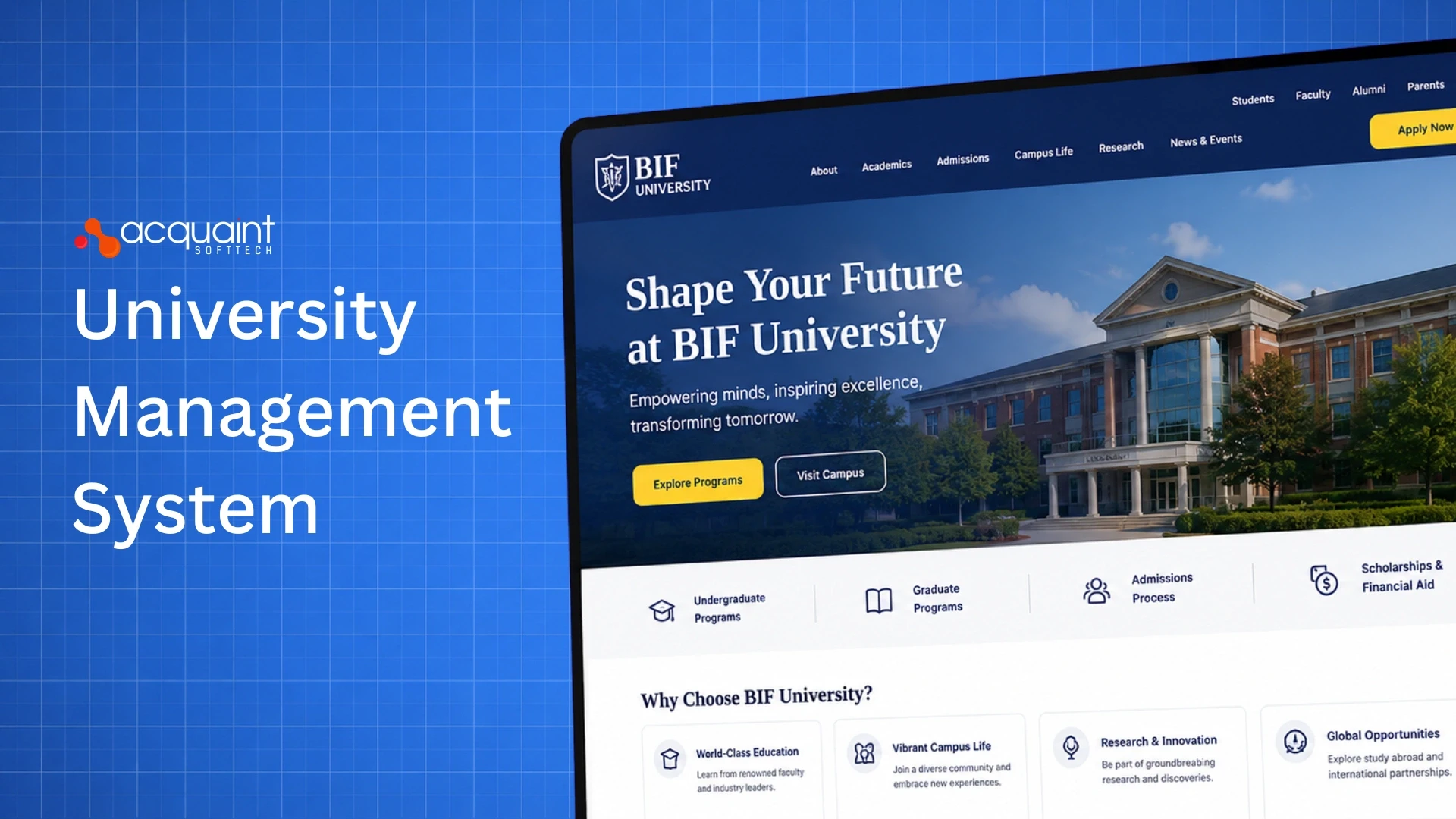
A university management system is software that runs the full student lifecycle and campus operations for a higher education institution, from admissions and registration through grading, finance, and graduation, on one connected platform.
AI in e-commerce uses machine learning to personalize the shopping experience, predict what each customer wants, and surface the right products at the right moment. The three core applications are personalization engines that adapt the storefront per user, recommendation systems that suggest relevant products, and intelligent search that understands intent. Done well, AI personalization drives revenue lifts of 10 to 40 percent.
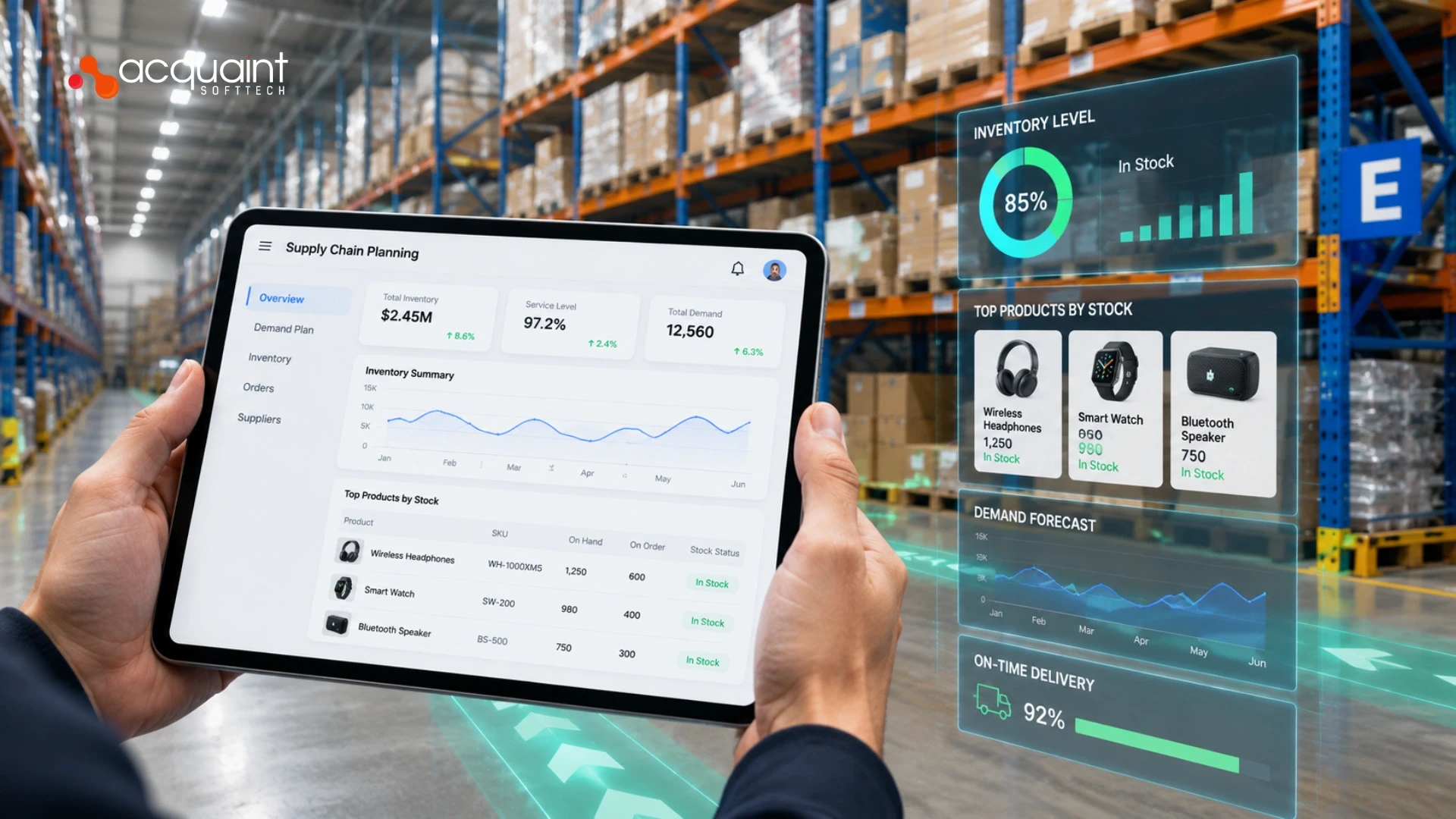
Supply chain planning software aligns what a business expects to sell with what it can supply, across one connected plan. It works through three linked layers: sales and operations planning (S&OP), which brings sales, finance, and operations to one agreed forecast; demand planning, which predicts future order volume per product; and inventory optimization, which sets the right stock at the right location to hit service targets at the lowest cost.
To build a cryptocurrency exchange, you assemble five core systems: an order book that records buy and sell orders, a matching engine that pairs them using price-time priority in sub-millisecond time, a hot and cold wallet layer that keeps 90 to 95% of assets in offline cold storage, a liquidity layer connected to external providers, and a KYC, AML, and compliance layer. In 2026, a custom exchange MVP costs roughly $50,000 to $250,000 and takes 4 to 9 months, while white-label launches in weeks.
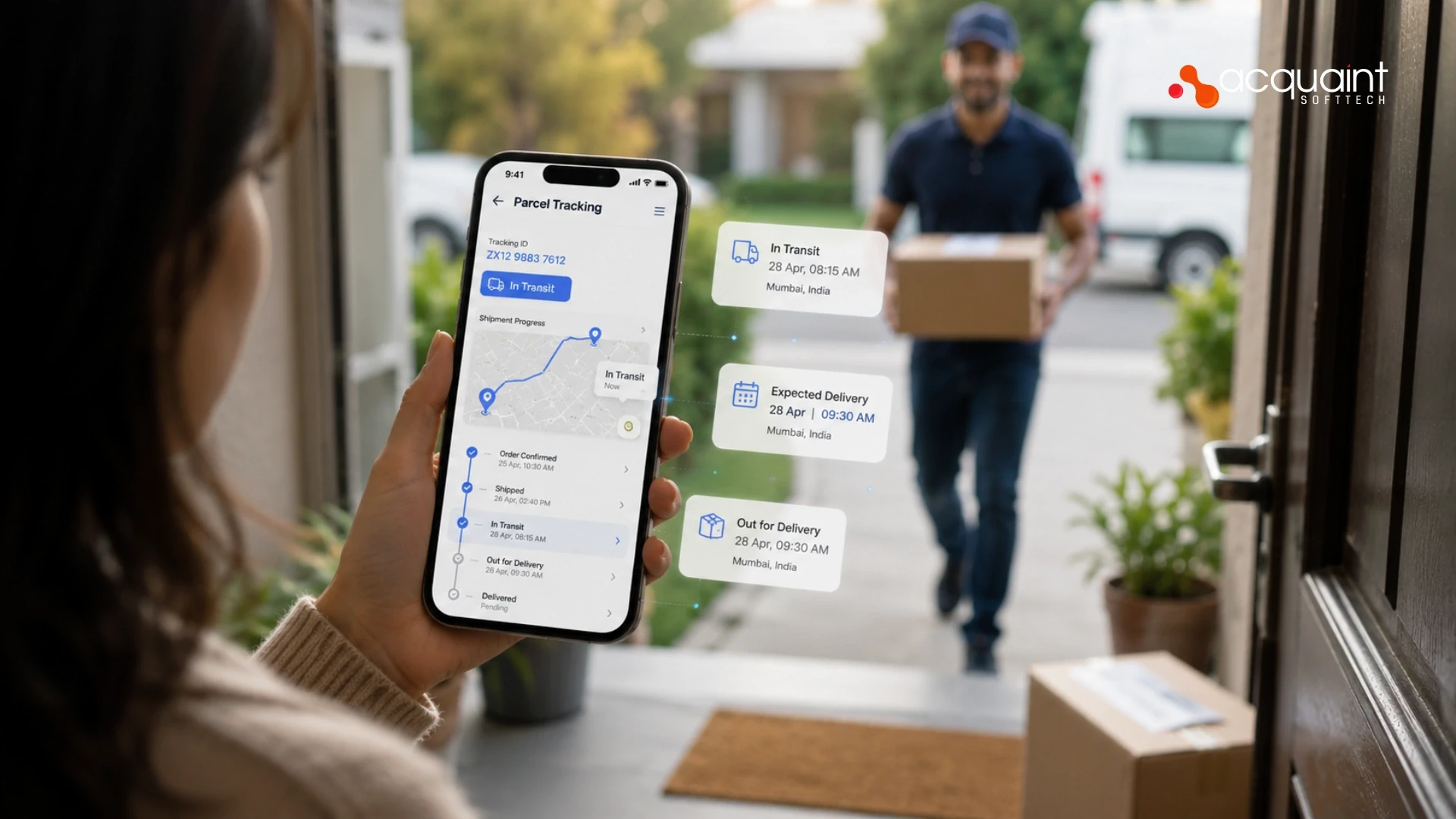
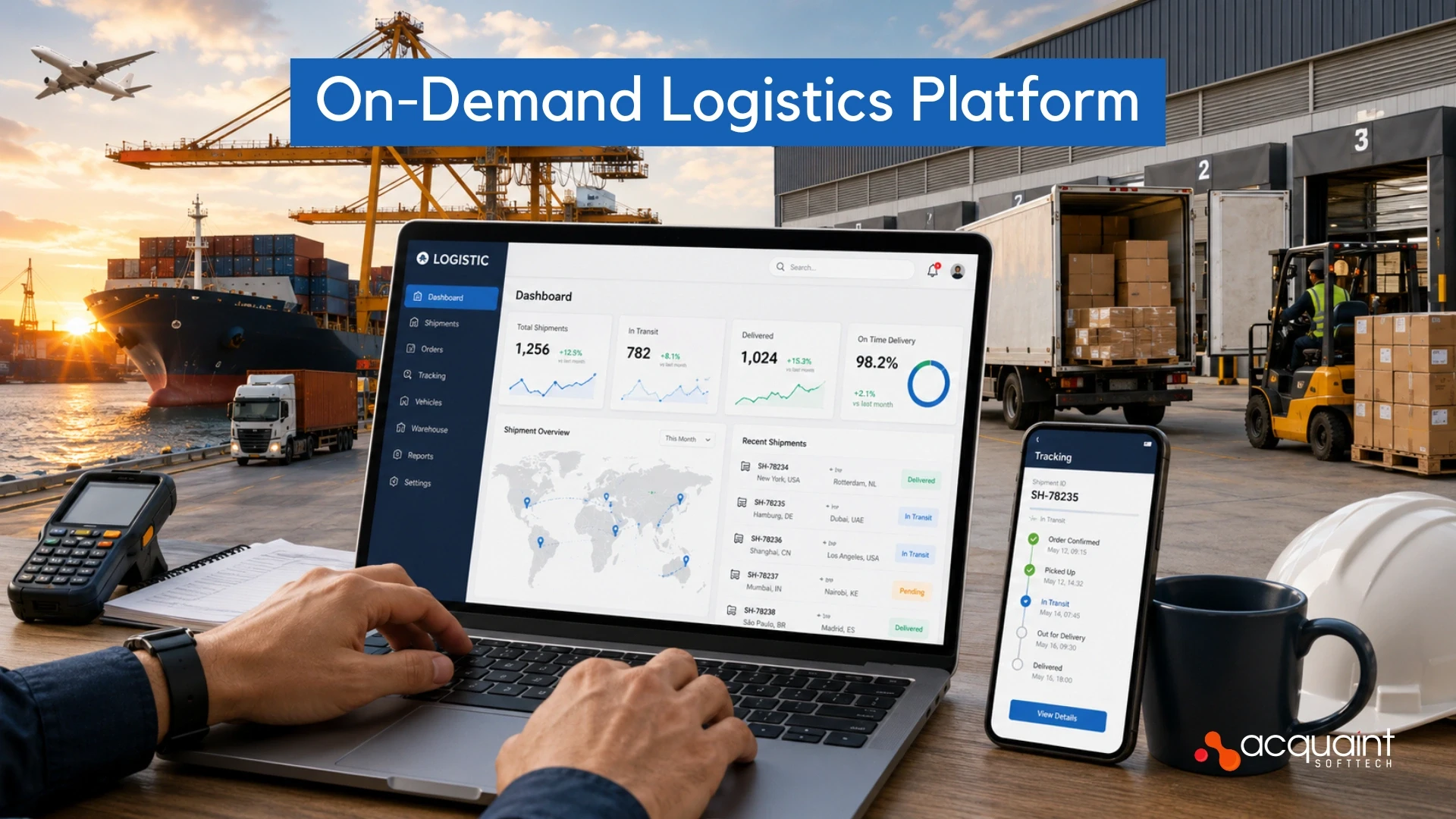
An on-demand logistics platform is software that lets customers book a courier, parcel, or last-mile delivery on demand and tracks it from pickup to drop-off. It connects senders, delivery partners, and an operations team through a routing engine, live GPS tracking, proof of delivery, and automated billing based on distance, weight, and zone.
Embedded insurance platform development is the process of building software that enables non-insurance brands to offer coverage at checkout or in their apps via APIs. It has three layers: a contextual offer engine that decides what to show and when, a partner-facing integration layer of quote and bind APIs, and a carrier layer that handles underwriting, policy, and claims.
A tours and activities booking platform lets travellers search, schedule, and pay for experiences while operators manage inventory in real time. It is built on four pillars: a scheduling engine for time slots and departures, a real-time availability module to prevent overbooking, a supplier management portal for operators to control their own inventory, and a booking and payment flow. The hard part is capacity, not the booking button.
A school management system is software that runs a school's core operations, admissions, attendance, grades, fees, timetabling, and parent communication, from one connected platform. It replaces scattered registers and spreadsheets with a single source of truth, automates reporting, and gives administrators, teachers, and parents secure role-based access to the records they need.
Building an online marketplace means creating a platform where many independent vendors sell to many buyers, while the operator owns the infrastructure and earns from each transaction.
AI and machine learning in logistics use historical and real-time data to predict demand, optimize delivery routes, and detect supply chain anomalies before they become costly problems. These technologies help businesses reduce costs, improve efficiency, and make faster, data-driven decisions.
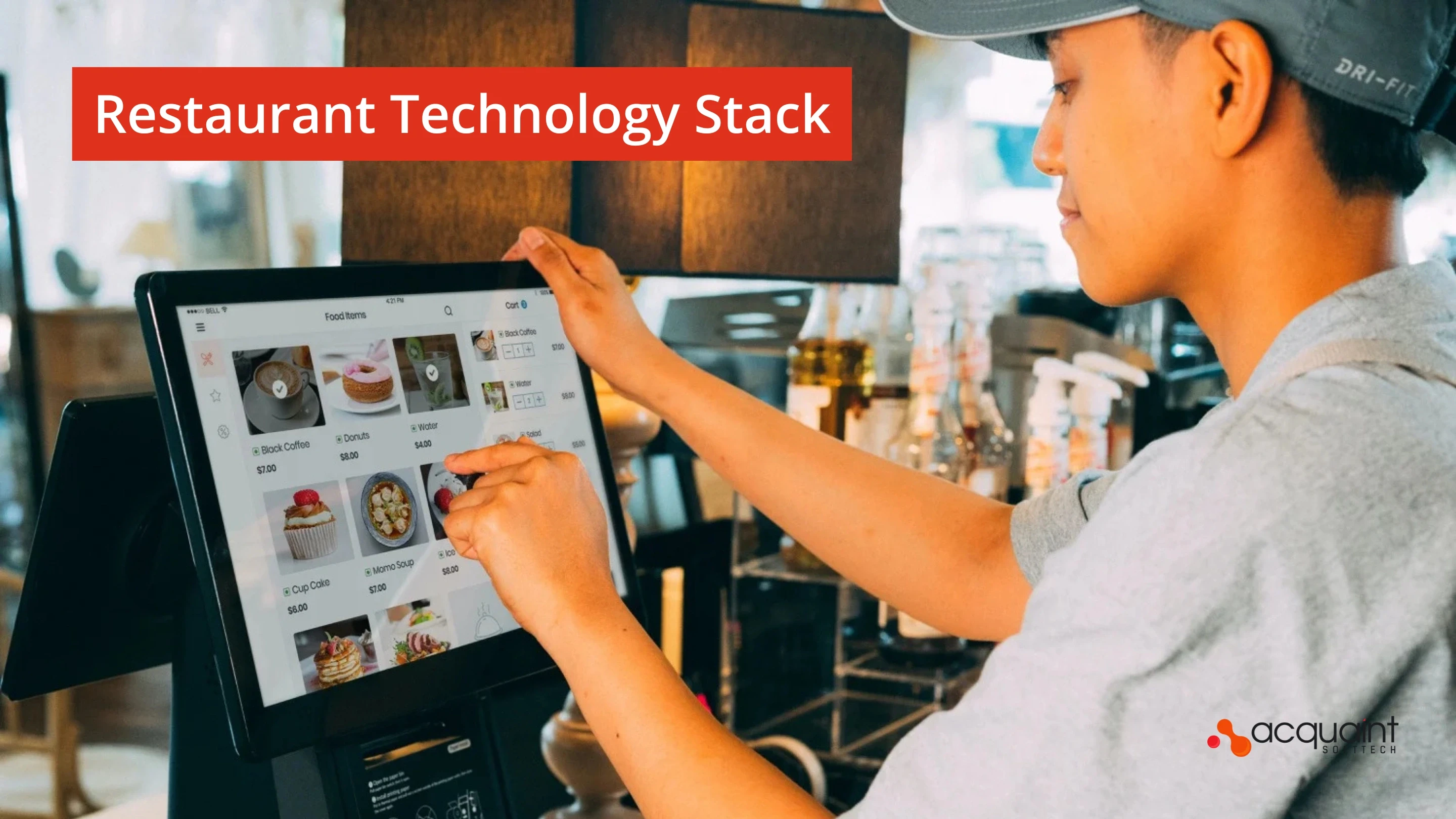
A restaurant technology stack is the connected set of software that runs a restaurant: a POS system to take orders and payments, an online ordering platform for direct digital sales, a kitchen display system (KDS) to route orders to cooks, and delivery integration to sync with apps like UberEats, Zomato, and Deliveroo. The value is in making these systems talk to each other from one source of data.
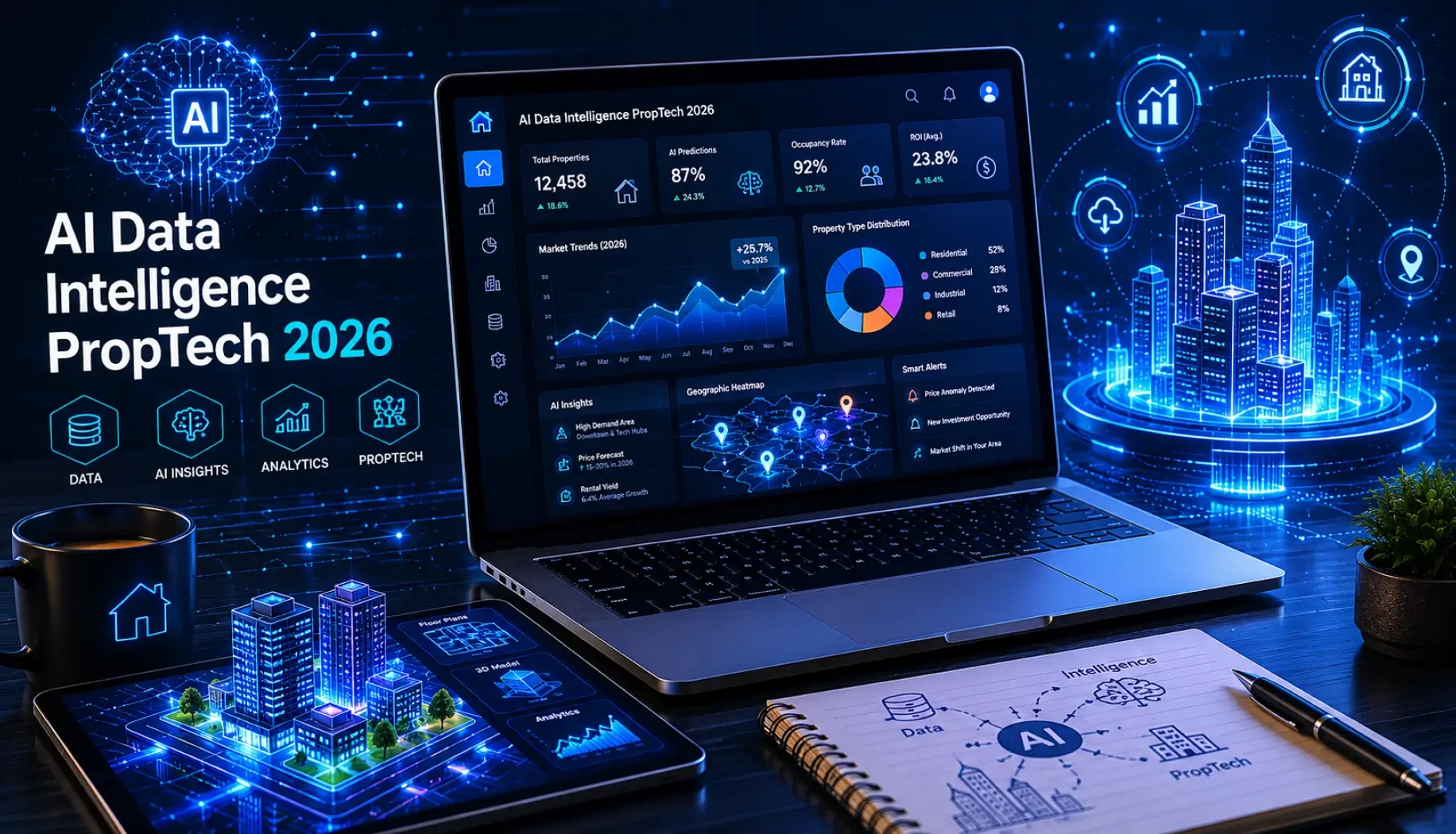
AI and data intelligence in PropTech is the application of machine learning, geospatial analysis, IoT sensor pipelines, and NLP to property valuation, rental analytics, tenant prediction, and buyer-property matching.
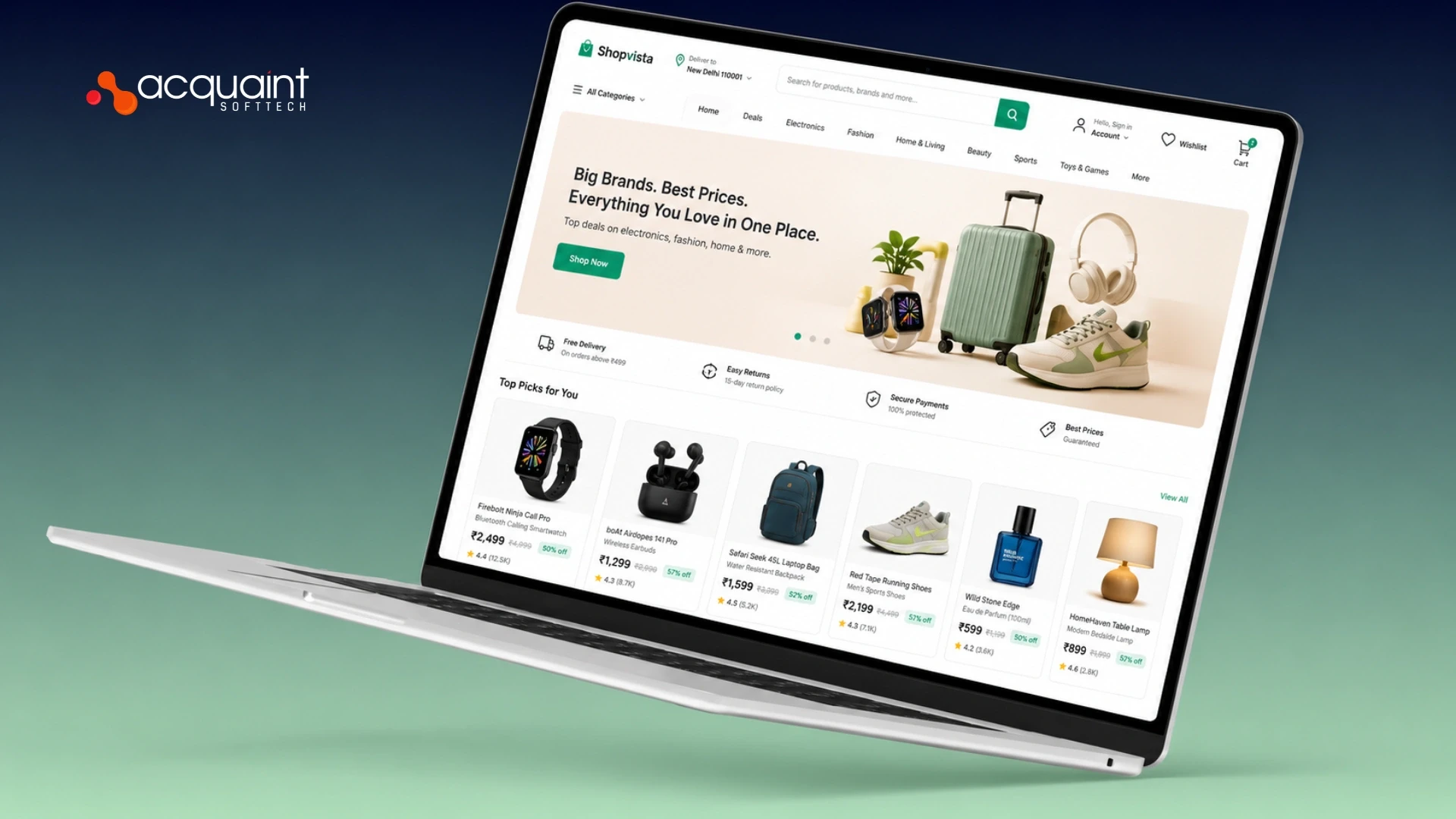
A D2C brand platform is a custom-built digital infrastructure that lets a brand sell directly to consumers without retail intermediaries, combining a branded storefront, subscription engine, loyalty module, customer data layer, and fulfillment system in one owned technology stack.


.webp "Building a Freelance Marketplace Like Upwork or Fiverr: Two-Sided Platform Architecture")
.webp "Auto Insurance Platform Development: Telematics, Usage-Based Insurance, Connected Car Integration")

.webp "Health Insurance Platform Development: Payer Systems, Member Portals, and Telehealth Integration")


.webp "Embedded Insurance Platform Development: APIs, Partner Integrations, and Contextual Offers")
.webp)
.webp "School Management System Development")